
Rice & Pulse Packaging Pillow Packs, Pouches and Rollstock
Clear and printed packaging options for rice, grains, and legumes. Guaranteed long shelf life.
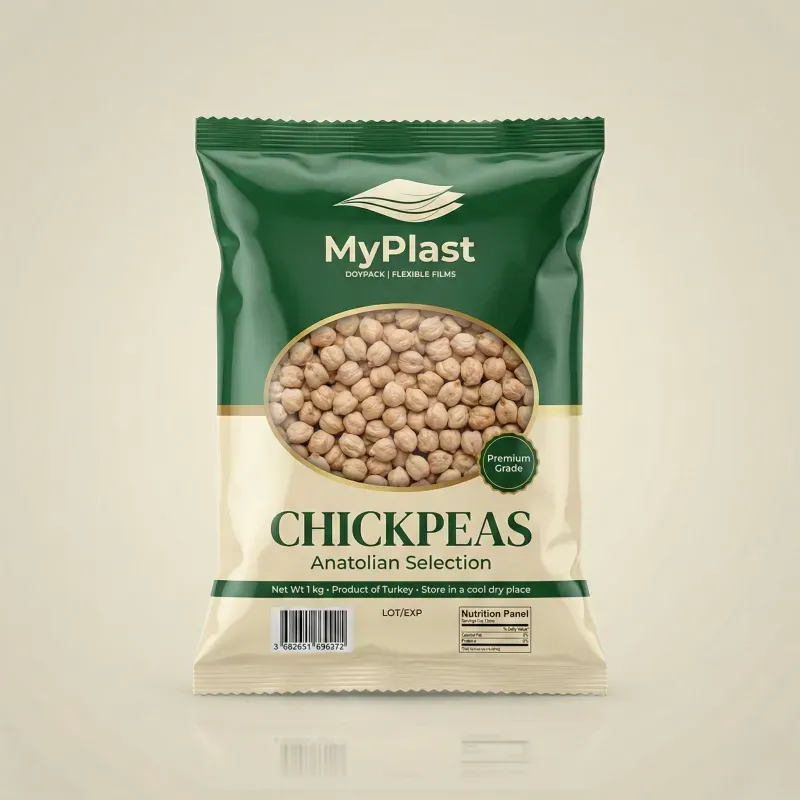
Rice, lentils, chickpeas, beans and bulgur are heavy and abrasive; in pulse and grain packaging strength comes first, then visibility. Shoppers judge quality by looking at the grain, so a clear film or window sells directly. MyPlast makes rice and pulse packaging as pillow (center-seal) packs, stand-up pouches and printed rollstock for packing lines.
- Custom print
- From 3,000 per size
- Production
- 14-40 business days (by print method)
- Printing
- Rotogravure, up to 10 colours
- Certifications
- ISO 9001 · ISO 22000
A heavy product needs a strong pack
- Grains abrade the film at seals and corners; thickness and seal strength are set by the fill weight
- Strong pillow packs and side-gusset bags for 1–5 kg retail and wholesale sizes
- Zipper stand-up pouches for premium lines; resealable and upright on the shelf
Clarity and print
Clear BOPP/CPP and PET/PE structures show the grain's colour and integrity. Matte–clear print shows the product only through a chosen window while the brand reads on a matte field. Printing is rotogravure in up to 10 colours.
Recyclability and rollstock
Pulses are not very sensitive to moisture or oxygen, which makes a recyclable Mono-PE structure a good fit for this category. Printed rollstock for vertical packing lines starts at 500 kg, produced in 14-40 business days (by print method) after artwork approval.
Frequently asked questions
Clear film or printed for rice and pulses?
Shoppers pick by looking at the grain, so clarity sells. Matte–clear print shows the product and still gives the brand room.
Is recyclable pulse packaging available?
Yes; pulses do not need a high barrier, so a Mono-PE structure suits this category.
What is the minimum order for rollstock?
500 kg of printed rollstock; production 14-40 business days (by print method).
Why MyPlast?
Fast Delivery
14-40 business days (by print method) production for custom print, express on request
Custom Solutions
Packaging design tailored to your product
Sustainability
Eco-friendly materials
Quality Guarantee
ISO production
Quick Response
Quote within 24 hours
25+ Years Experience
Leading company in the sector
Get a Quote Now
Request custom legumes packaging solutions for your project. We will respond within 24 hours.
Request Free QuoteSimilar Industries
Explore our packaging solutions for other industries
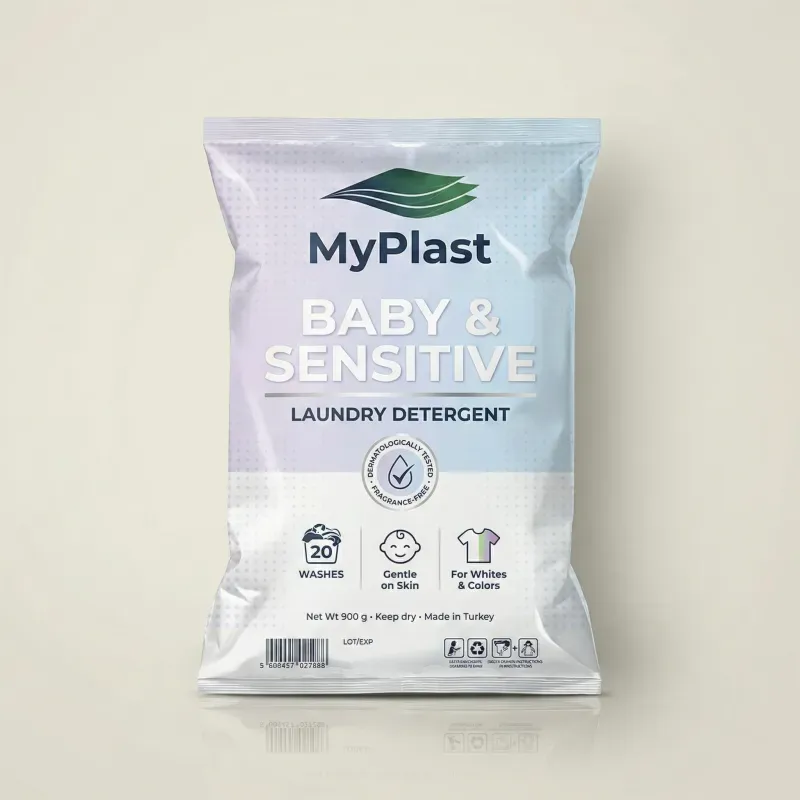
Detergent
High-barrier, leak-proof packaging solutions for powder and liquid detergents. Moisture and oxygen protection.
View Details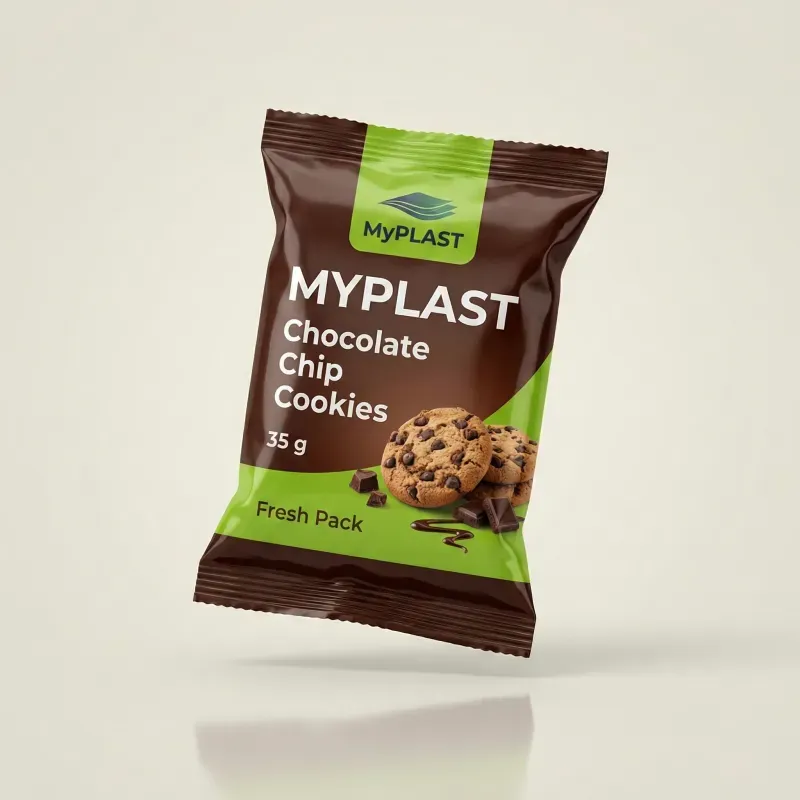
Biscuits
Metallized and barrier packaging for biscuits and cookies. Protection against breakage and staleness.
View Details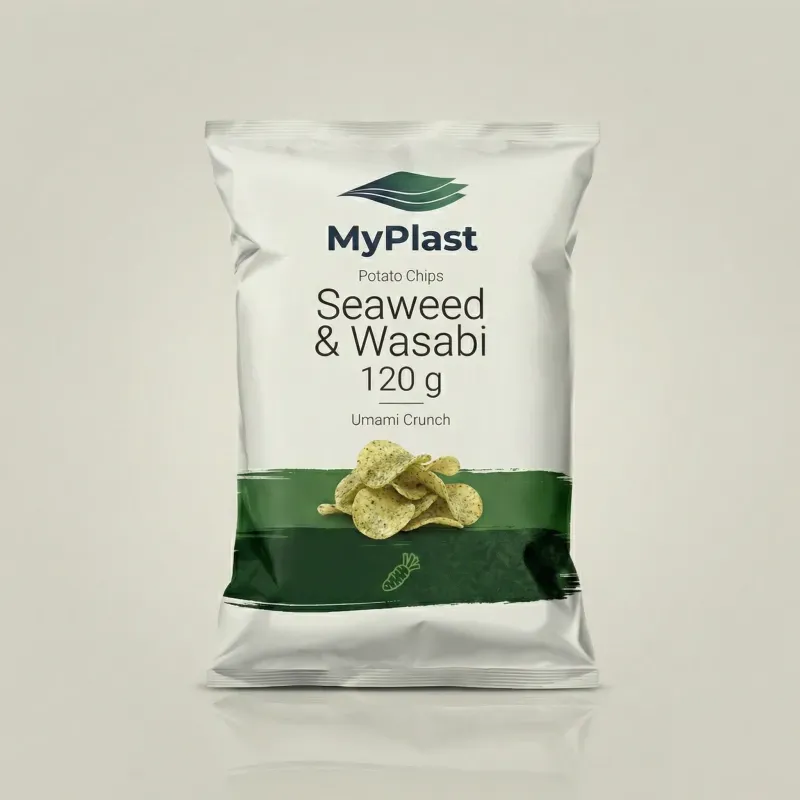
Chips
Nitrogen-flushed, high-barrier packaging for chips and snacks. Guaranteed crispness and freshness.
View DetailsGet Custom Quote for Your Project
Contact us now for custom packaging solutions. We respond within 24 hours.
Get Quote NowAbout This Packaging
Legume and dry food packaging is one of the most technically demanding categories in flexible packaging. Lentils, chickpeas, kidney beans, dried peas, and grains share a common vulnerability: moisture ingress. Even a 5–10% relative-humidity rise inside the pack can trigger mould growth, accelerate staling, and shorten the declared shelf life. MyPlast legume packaging is engineered to maintain hermetic integrity from sealing through to the end of shelf life.
Dry food products are hygroscopic — they absorb ambient moisture readily. This moisture uptake causes textural softening, flavour loss, and in some cases microbial spoilage. Selecting the right barrier structure therefore directly determines product quality.
Barrier Requirements
Moisture barrier (MVTR): The water vapour transmission rate (MVTR) is the defining specification for dried legume and grain packaging. For standard retail formats (250 g – 1 kg), MyPlast achieves MVTR ≤1.5 g/m²/day using PET/PE or OPP/PE laminates. For export packaging requiring 18+ month shelf life, a three-layer PET/MET-PET/PE or PET/Aluminium Foil/PE laminate is recommended, achieving MVTR ≤0.5 g/m²/day.
Oxygen barrier (OTR): Legumes are less oxygen-sensitive than processed snacks, but high-fat varieties such as peanuts are at risk of oxidative rancidity. A high-barrier structure with OTR ≤3 cc/m²/day protects against both moisture and oxygen degradation. Aluminium foil structures bring OTR close to zero, offering the highest level of protection.
Material Options
- 1Clear transparent OPP/BOPP or PET/PE laminate — provides full product visibility; a decisive retail purchase factor for premium lentil and chickpea brands. Preferred for 250 g, 500 g and 1 kg retail formats.
- 2Kraft-look semi-transparent — kraft outer layer with clear window delivers a natural, artisanal brand positioning favoured by organic legume brands.
- 3Metallized barrier (PET/MET-PET/PE or BOPP/MET-BOPP) — highest barrier performance. Used for export packaging where shelf life must exceed 18 months or humidity conditions in transit are unpredictable.
- 4Mono-PE recyclable structure — CEFLEX and RecyClass compliant, compatible with mechanical PE recycling streams. Recommended for legume brands with sustainability commitments.
Packaging Format Options
Pillow bag (centre-seal): The most cost-efficient format for legumes sold through supermarkets, discount chains and wholesale channels. Produced on VFFS (Vertical Form Fill Seal) lines. Common sizes: 500 g, 1 kg, 2 kg, 5 kg. For hermetic closure on PE-sealed legume bags, sealing temperature is typically 140-160°C with 0.4-0.6 second dwell time.
Flowpack (horizontal flow wrap): Preferred for flat or block-shaped legume portions — for example, pre-portioned soup mixes or inner sachet-within-bag formats. MyPlast flowpack film is available in reel widths from 200 mm to 850 mm for standard horizontal FFS machines.
Doypack (stand-up zipper pouch): For premium retail positioning and consumer convenience. A resealable doypack lets consumers close the pack after partial use, preserving freshness and reducing household waste. Typical sizes for legumes: 500 g and 1 kg. MOQ for custom-printed doypack starts at 3,000 pieces.
Side-gusset bag: Optimal for large-format packs (2 kg – 25 kg). The gusseted structure maximises fill efficiency for dense, granular products such as chickpeas, whole lentils and pearl barley. Suitable for wholesale channels, institutional food services and export.
Certification & Food Safety
MyPlast packaging is produced under ISO 22000 Food Safety Management System. All food-contact materials are migration-tested for compliance with EU Regulation 10/2011. These certifications ensure your products meet market entry requirements for the EU, GCC and Turkish markets.
MOQ & Ordering Process
Stock MOQ is 1,000 pieces with a 3–5 business day lead time. For custom-print orders, MOQ is 3,000 pieces with 14-40 business day lead time. For VFFS/flowpack reel supply, minimum 200 kg per reel specification applies.
Frequently Asked Questions
What moisture barrier level is best for legume packaging?
For domestic distribution a PET/PE laminate (MVTR ≤1.5 g/m²/day) is sufficient. For humid climates or export, a PET/MET-PET/PE or aluminium foil structure (MVTR ≤0.5 g/m²/day) is recommended. This level prevents moisture uptake for 18+ months, preserving food safety and texture.
What is the minimum order quantity for legume packaging?
For stock clear pillow bags, the MOQ is 1,000 pieces with a 3–5 business day lead time. For custom-print and custom-size orders (doypack or side-gusset), MOQ is 3,000 pieces and lead time is 14-40 business days (by print method). For high-volume VFFS/flowpack reel supply, a minimum of 200 kg per reel specification applies.
Is legume packaging recyclable?
Yes. MyPlast offers mono-PE and mono-PP all-polyolefin structures compatible with existing PE and PP mechanical recycling streams. These recyclable options are available in both transparent and opaque variants, compliant with RecyClass and CEFLEX guidelines. Our technical team can recommend the right recyclable laminate matched to your product's specific barrier requirements.