
Sourcing Flexible Packaging from Turkey: A Guide for European Buyers
Why are European brands moving pouch production from Asia to Turkey? Customs union access, road freight measured in days, and EU-grade certification — a practical sourcing guide.
Written by MyPlast Technical Team
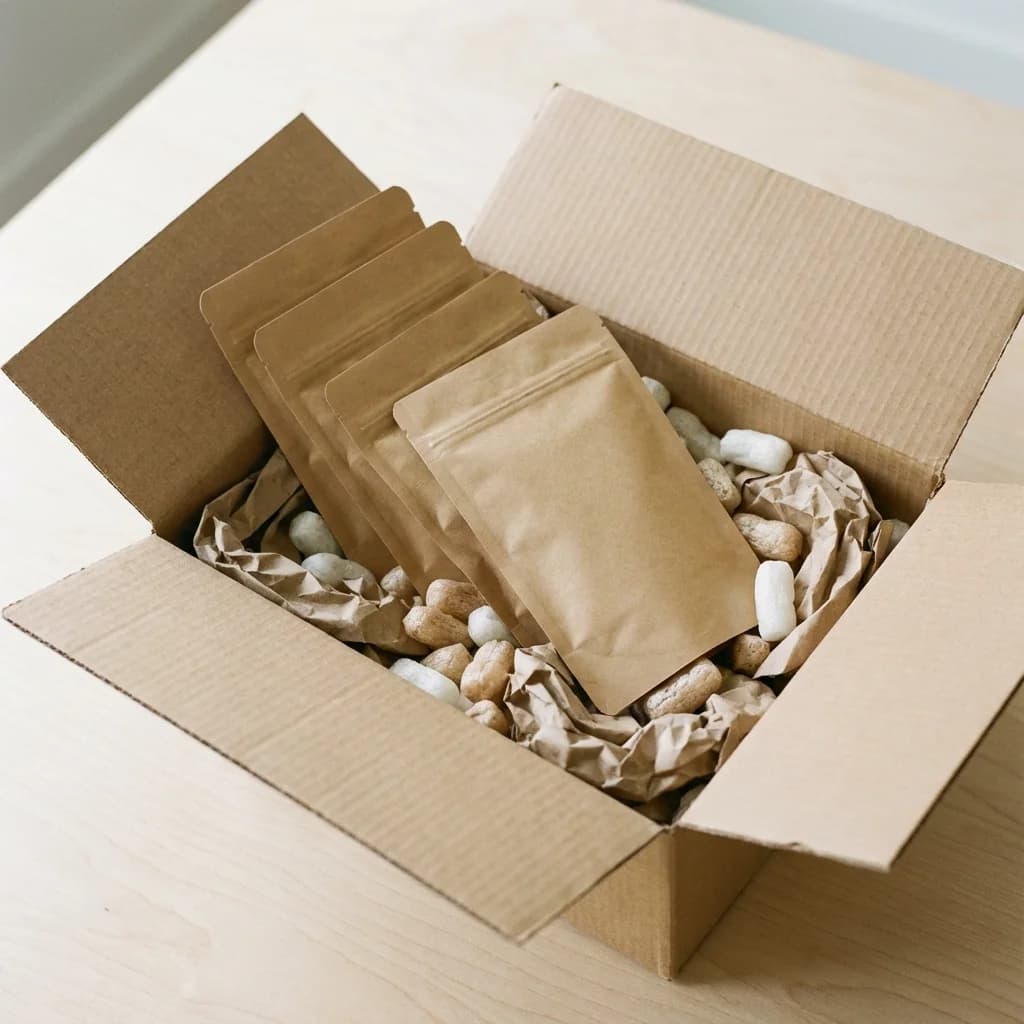
Summary: Turkey has become one of the most practical sourcing locations for custom flexible packaging in Europe. This guide explains what a European buyer should know before ordering pouches from a Turkish manufacturer: how the EU–Turkey Customs Union affects duties, what lead times and logistics really look like, which certifications to demand, and how Turkish sourcing compares with ordering from Asia.
Why European Brands Source Flexible Packaging from Turkey
Three structural factors make Turkey different from other offshore packaging sources:
- The EU–Turkey Customs Union. In force since 1996, it covers industrial goods — including printed flexible packaging. For buyers in Germany, the Netherlands, France, Greece or any other EU member state, that means no customs duties on pouches manufactured in Turkey.
- Road freight measured in days, not weeks. A truck loaded in Istanbul reaches most of Central and Western Europe in roughly 3–7 days. Sea freight from East Asia typically takes 4–6 weeks port-to-port before inland transport even begins.
- EU-grade compliance culture. Because Turkish converters primarily serve European food brands, the leading factories are audited against the same standards European retailers demand: ISO 9001, ISO 22000, and EU 10/2011 food-contact migration rules.
What About the United Kingdom?
The UK left the EU, but Turkish goods still enter under the UK–Türkiye Free Trade Agreement, in force since 2021, which preserves preferential tariff treatment for industrial products. Combined with road-and-ferry logistics, UK coffee roasters, snack brands and pet food companies can treat a Turkish pouch supplier much like a continental European one — with being especially meaningful, since the standard originated with the British Retail Consortium.
Turkey vs. China: An Honest Comparison
Asian converters remain excellent at very large runs of standardized products. The comparison matters most for brands that reorder frequently, iterate on designs, or run multiple SKUs:
- Total lead time. A typical custom-printed order from a Turkish plant ships in 14-40 business days (by print method) of production plus days of road transit. The same order from East Asia adds roughly a month of ocean transit — and any error discovered on arrival restarts that clock.
- Rework risk. When a print or size revision is needed, a Turkey-based supplier can turn a corrected batch around within weeks. Trans-continental rework cycles are commonly measured in months.
- Communication and time zones. Turkish export teams work European hours, and factory visits from most of Europe are a short direct flight.
- Duties and paperwork. Under the Customs Union, EU-bound shipments avoid the tariff exposure and origin complexities that apply to many Asian imports.
What to Check Before Choosing a Turkish Packaging Supplier
1. Certification you can verify
At MyPlast, production runs in certified facilities, with ISO 9001 and ISO 22000 management systems and EU 10/2011-compliant food-contact laminates.
2. Realistic minimums and lead times, in writing
Custom-printed pouches from a Turkish converter typically start at a few thousand pieces per SKU — at MyPlast from 3,000 pieces — while unprinted stock pouches can start from 500 pieces. Treat any supplier unwilling to state MOQ and production lead time in a written quotation with caution.
3. Recyclability options for PPWR
The EU's Packaging and Packaging Waste Regulation (PPWR) is tightening recyclability requirements across every member state. If your roadmap includes recyclable formats, confirm the supplier already produces mono-PE laminates in commercial volumes rather than promising them for the future. MyPlast supplies mono-material stand-up pouches alongside conventional high-barrier structures.
4. Format breadth
Consolidating multiple formats with one converter simplifies audits and freight. A full-service Turkish plant should cover stand-up pouches (doypack), flat-bottom (box) pouches, quad-seal bags, and rollstock film for VFFS/HFFS lines.
How Ordering Works in Practice
- Specification and quotation. Share dimensions, fill weight, barrier needs and print design; a serious supplier responds with a written quotation — at MyPlast, within 24 hours.
- Sampling. Physical samples or print proofs before committing the full run.
- Production. Rotogravure printing up to 10 colors, lamination, pouch converting and QC — typically 14-40 business days (by print method) for printed orders.
- Delivery. Road freight across Europe with standard Incoterms (EXW, FOB, DAP), invoiced in USD or EUR.
Which European Markets Does This Work Best For?
In practice, Turkish flexible packaging flows strongly to Germany, the UK, the Netherlands, France and Belgium, and increasingly to the Balkans — Serbia, Albania, North Macedonia, Greece, Bulgaria and Romania — where road transit from Istanbul can be as short as one to three days and Turkey holds free trade agreements with several non-EU states. The Caucasus (Georgia, Azerbaijan) and Central Asia are similarly natural markets, with Turkey among their largest import partners.
Frequently Asked Questions
Do I pay customs duty on packaging imported from Turkey into the EU?
No. Printed flexible packaging is an industrial good covered by the EU–Turkey Customs Union, so it enters EU member states without customs duties. Standard VAT rules of your country still apply, as with any purchase.
Is Turkish packaging quality comparable to Western European converters?
The leading Turkish plants run the same certification stack (ISO 9001, ISO 22000) and comparable printing technology. The practical difference is cost structure and logistics rather than quality tier — which is why judging a specific supplier by its audited certifications, not its country, is the right approach.
What is the minimum order for custom printed pouches from Turkey?
At MyPlast, custom-printed pouches start from 3,000 pieces per design, and unprinted stock pouches from 500 pieces. Contact us with your specification for a quotation within 24 hours.