
Coffee Packaging Guide: Freshness, Aroma, and Shelf Life
How does a degassing valve work? Which barrier film is ideal for coffee? Doypack or Flat Bottom? All technical details about coffee packaging from A to Z in this guide.
Written by MyPlast Technical Team
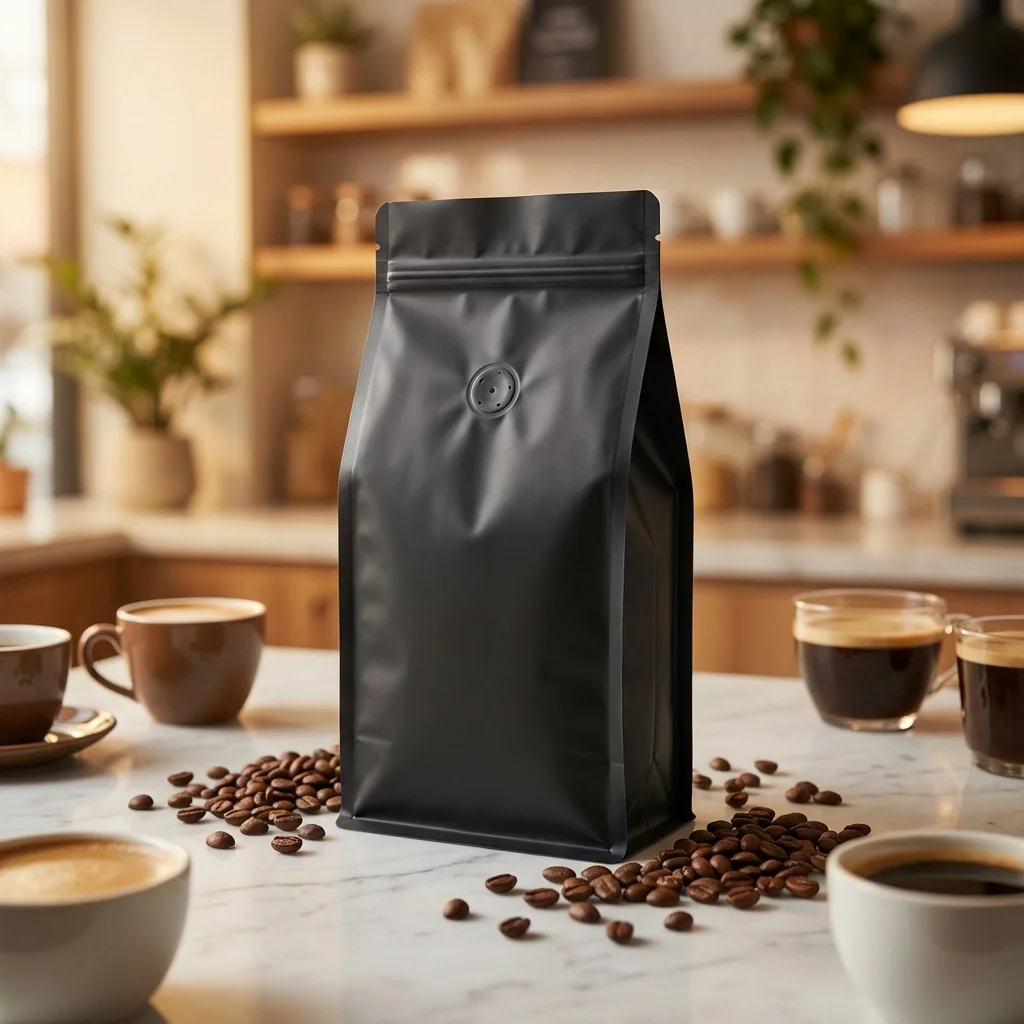
Summary: Coffee packaging is a critical factor that directly affects freshness, aroma, and shelf life. In this comprehensive guide, you will find everything you need to know about coffee packaging - from degassing valves and barrier film technologies to packaging formats and 2025 sustainability trends.
Why Coffee Packaging Is So Critical
Coffee is one of the most popular beverages in the world, with more than 2.5 billion cups consumed daily. Yet this valuable product is also one of the most delicate food categories. After roasting is completed, coffee beans enter a chemical transformation process, and this process is directly tied to packaging quality.
Freshly roasted coffee beans contain:
- 800+ aromatic compounds: Volatile compounds that create coffee's signature flavor and aroma
- Lipids (fats): Components that give coffee its creamy texture and are prone to oxidation
- Carbon dioxide: Gas produced during roasting that continues to be released for days
Without proper packaging, premium coffee beans start losing their character in just 7-10 days. With the right packaging solution, this period can be extended to up to 12 months.
Degassing Valve: The Heart of Coffee Packaging
What Is a Degassing Valve and How Does It Work?
The one-way degassing valve is the most critical component of coffee packaging. This engineering marvel performs a complex function despite its simple appearance:
- Allows CO2 to escape: Freshly roasted coffee releases about 40% of its total CO2 within the first 72 hours after roasting
- Blocks oxygen entry: Prevents oxygen molecules from entering the package
- Balances pressure: Controls pressure build-up inside the package
What Happens Without a Degassing Valve?
There are two scenarios when a degassing valve is not used:
Scenario 1 - Immediate packing: If coffee is packed right after roasting, CO2 accumulates, inflates the package, and can cause bursting. This creates serious issues, especially during shipping.
Scenario 2 - Waiting: The coffee is left to off-gas, but during this time it is exposed to oxygen and oxidation begins. Result: stale, flat coffee.
Barrier Film Technology: The Science of Shelf Life
Core Barrier Metrics
Performance of films used in coffee packaging is measured by two key metrics:
| Metric | Description | Ideal Value for Coffee |
|---|---|---|
| WVTR | Water Vapor Transmission Rate (g/m²/day) | < 1.0 |
| OTR | Oxygen Transmission Rate (cc/m²/day) | < 1.0 |
Recommended Lamination Structures for Coffee
Structures that can be used across different quality and cost levels:
| Structure | Barrier Level | Shelf Life | Use Case |
|---|---|---|---|
| PET/AL/PE | Ultra High | 12-18 months | Premium, export |
| PET/MPET/PE | High | 9-12 months | Standard retail |
| BOPP/BOPP | Medium | 3-6 months | Fast moving |
| Kraft/PE | Low-Medium | 1-3 months | Artisanal, local sales |
Packaging Formats: Which One Is Right for You?
Doypack (Stand-Up Pouch)
Doypack is the most popular format in the coffee retail market. Advantages:
- Excellent shelf visibility - stands upright
- Resealable zipper options
- Wide size range from 100g to 1kg
- Cost-effective production
- Easy storage and transport
Ideal use: Supermarket shelves, online sales, everyday coffees
Flat Bottom (Box Pouch)
Flat Bottom packaging is preferred for premium positioning:
- 5 printable surfaces - maximum brand space
- Box-like aesthetic
- Superior shelf stability
- Premium perception
Ideal use: Specialty coffee, gift packs, boutique brands
Quadro Seal
Quadro Seal is optimized for larger volumes:
- Ideal for 1kg+ weights
- Reinforced side seams
- High durability
- Suitable for HoReCa (hotel, restaurant, cafe) sector
Center Seal (Pillow Pouch)
For brands looking for an economic solution:
- Lowest-cost format
- Compatible with high-speed production lines
- Ideal for single-serve portions
Factors That Affect Coffee Freshness
1. Oxygen Exposure
Oxidation of fats in coffee is the main cause of staling. Coffee exposed to normal air containing 21% oxygen begins to deteriorate quickly.
2. Moisture
Coffee is hygroscopic and absorbs moisture from the air. When moisture exceeds 12%, mold risk increases.
3. Light
UV rays break down chlorogenic acids in coffee, creating bitter notes. Opaque or metallized packaging should be used.
4. Temperature
High temperatures accelerate chemical reactions. Ideal storage: 15-25°C.
Sustainable Coffee Packaging: 2025 Trends
The coffee sector continues to lead in environmental responsibility. Trends for 2025 include:
Mono-Material Solutions
Mono-PE and Mono-PP structures are replacing traditional multi-layer laminations. These structures are:
- 100% recyclable
- Compatible with existing recycling infrastructure
- Comparable barrier performance
PCR Content Films
Films containing Post-Consumer Recycled (PCR) plastic support the circular economy.
Compostable Options
PLA-based and paper-based compostable packaging is gaining popularity, especially among organic coffee brands.
Brand Image and Packaging Design
Coffee packaging does more than protect - it tells your brand's story:
Color Psychology
- Black: Premium, sophisticated
- Brown/Kraft: Natural, artisanal
- Gold: Luxury, exclusive
- Green: Organic, sustainable
Printing and Coating Options
- Matte lamination - modern, elegant look
- Gloss lamination - vivid colors
- Soft-touch coating - premium tactile experience
- Spot UV - highlighted details
Common Mistakes and Solutions
Mistake 1: Choosing Insufficient Barrier
Problem: Using a low-barrier film to save costs.
Result: Short shelf life, customer complaints, loss of brand reputation.
Solution: Select barrier level based on target shelf life.
Mistake 2: Skipping the Degassing Valve
Problem: Avoiding a valve to reduce costs.
Result: Swollen packages, risk of bursting, quality loss.
Solution: A degassing valve is mandatory for freshly roasted coffee.
Mistake 3: Wrong Weight-Format Match
Problem: Using doypack for 1kg coffee.
Result: Weak shelf stability, risk of seam failure.
Solution: For 500g and above, choose quadro seal or flat bottom.
Frequently Asked Questions (FAQ)
Is a degassing valve mandatory for coffee packaging?
Yes, a degassing valve is mandatory for freshly roasted coffee. Coffee releases intense CO2 for 2-3 weeks after roasting. In valve-less packaging, this gas accumulates and can burst the bag. As an alternative, coffee can be left to off-gas before packing, but oxygen exposure during this time causes staling.
What is the best packaging material for coffee?
For premium coffee, the PET/AL/PE (aluminum-laminated) structure provides the best protection. It creates excellent barriers against oxygen and moisture and extends shelf life to 12-18 months. For more economical options, the PET/MPET/PE (metallized) structure offers acceptable performance.
Is a zipper necessary on coffee packaging?
For consumer convenience, the zipper has become an industry standard. A resealable zipper helps preserve freshness after opening. Premium products often use double-zipper or press-to-close systems.
Is recyclable coffee packaging possible?
Yes. Thanks to mono-material (Mono-PE or Mono-PP) technology, 100% recyclable coffee packaging can be produced. These structures offer barrier performance comparable to traditional laminations and are fully compatible with existing recycling infrastructure.
What factors affect coffee packaging cost?
The main factors are: (1) Film structure and barrier level, (2) Packaging format (doypack, flat bottom, quadro), (3) Print quality and number of colors, (4) Additional features (degassing valve, zipper, window), (5) Order quantity. Unit costs drop significantly with higher volumes.
Does ground coffee require different packaging?
Ground coffee has a much larger surface area than whole beans and is more prone to oxidation. For ground coffee, higher-barrier films and nitrogen gas packaging (MAP) are recommended. Ground coffee also releases less CO2, so in some cases it can be packaged without a degassing valve.
What is the minimum order quantity for coffee packaging?
Minimum order quantity varies by supplier and production model, but typically ranges from 1,000-5,000 pcs for stock items and 10,000-50,000 pcs for custom printed products. For smaller brands, digital printing options allow custom designs at lower quantities (2,000-5,000 pcs).
Conclusion and Recommendations
Coffee packaging is not just a protection tool - it is a tangible expression of your brand's quality promise. The right packaging selection:
- ✅ Protects product freshness and quality
- ✅ Maximizes shelf life
- ✅ Strengthens brand perception
- ✅ Increases customer satisfaction
- ✅ Reduces return rates
Getting professional guidance for your coffee packaging solutions can provide important long-term advantages in both cost savings and brand value.
At MyPlast, we provide expert solutions with degassing valves, high-barrier films, and premium packaging formats.
Contact Us →