
Extend Shelf Life with Barrier Films: WVTR & OTR Explained
How barrier films protect food from moisture and oxygen. Compare WVTR and OTR ratings to choose the right lamination for longer shelf life.
Written by MyPlast Technical Team
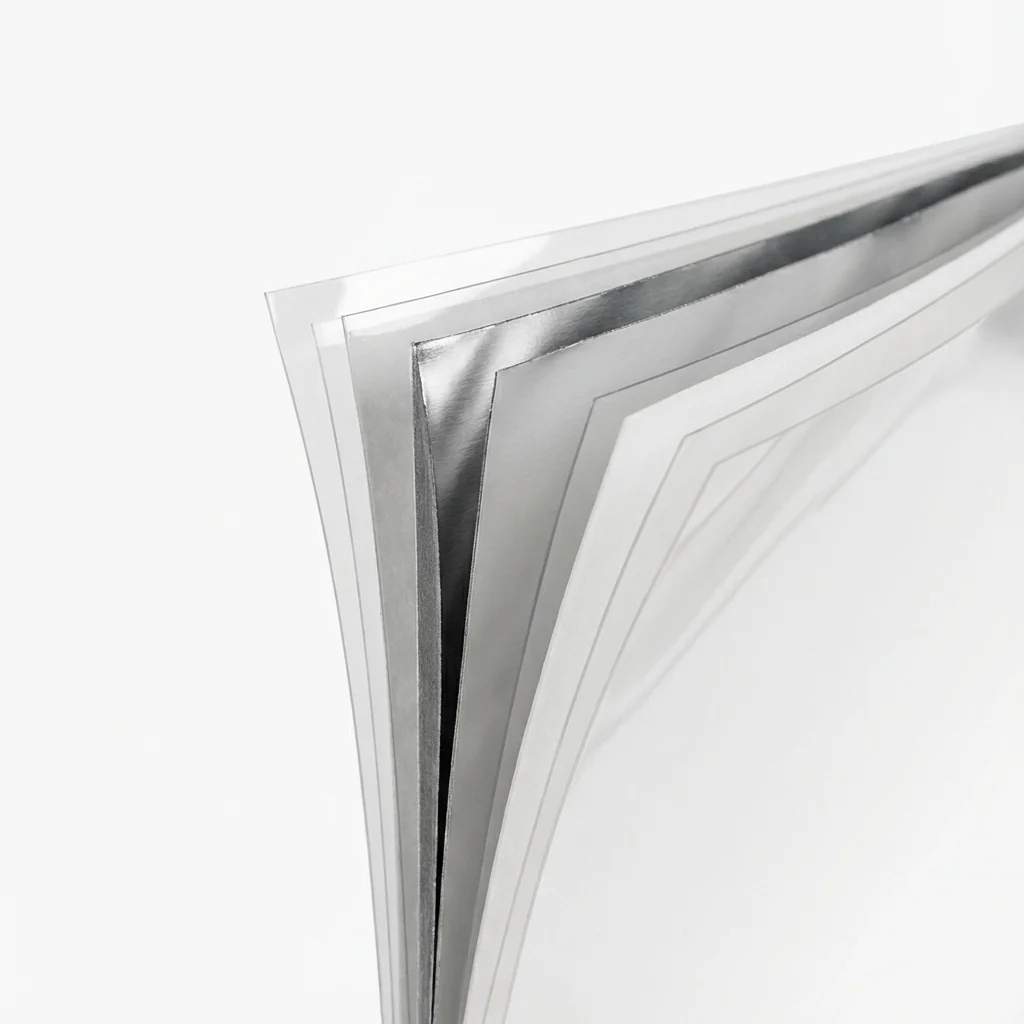
Summary: Barrier films are critical technologies that extend shelf life by preserving food freshness and quality. In this guide we cover WVTR and OTR concepts, lamination structures, product-barrier matching, and test methods — the full science of barrier packaging.
What Is a Barrier Film?
A barrier film is a plastic film that blocks or limits the transfer of specific substances (oxygen, moisture, light, aroma) into or out of a package. In food packaging, barrier films protect product quality and extend shelf life.
Why Barrier Performance Matters
Main causes of food spoilage:
- Oxidation: Oxygen exposure degrades fats, changes color, and reduces vitamins
- Moisture shift: Moisture gain or loss changes texture and taste
- Light damage: UV and visible light break down vitamins and fade colors
- Aroma loss: Escape of volatile compounds reduces product character
Core Barrier Metrics
WVTR - Water Vapor Transmission Rate
WVTR measures how much water vapor passes through a film:
- Unit: g/m²/24 hours (at 38°C, 90% RH)
- Lower value = better moisture barrier
- Critical for dry products (snacks, nuts)
| Barrier Level | WVTR Value | Example Materials |
|---|---|---|
| Ultra High | < 0.5 g/m²/day | PET/AL/PE, foil laminations |
| High | 0.5 - 2 g/m²/day | MPET laminations, EVOH structures |
| Medium | 2 - 10 g/m²/day | PET/PE, OPP/PE |
| Low | > 10 g/m²/day | Single-layer PE, PP |
OTR - Oxygen Transmission Rate
OTR measures how much oxygen passes through a film:
- Unit: cc/m²/24 hours (at 23°C, 0% RH)
- Lower value = better oxygen barrier
- Critical for fatty products, coffee, and meats
| Barrier Level | OTR Value | Suitable Products |
|---|---|---|
| Ultra High | < 1 cc/m²/day | Coffee, pharmaceuticals, vacuum meat |
| High | 1 - 5 cc/m²/day | Nuts, cheese, cured meat |
| Medium | 5 - 50 cc/m²/day | Snacks, biscuits |
| Low | > 50 cc/m²/day | Fresh bread, produce |
Multi-Layer Film Structures
Layer-by-Layer Protection Principle
Modern flexible packaging is built from multiple layers, each with a specific role:
Outer Layer (Print Layer)
- Materials: PET, BOPP, Nylon
- Function: print surface, mechanical strength, gloss
- Thickness: typically 12-25μ
Barrier Layer
- Materials: aluminum foil, MPET, EVOH, SiOx coating
- Function: oxygen, moisture, and light barrier
- Thickness: AL: 6-12μ / EVOH: 3-15μ
Inner Layer (Sealant Layer)
- Materials: PE (LDPE, LLDPE), CPP
- Function: heat sealing, food contact safety
- Thickness: typically 30-100μ
Common Lamination Structures
| Structure | OTR | WVTR | Ideal Applications |
|---|---|---|---|
| PET/AL/PE | < 0.5 | < 0.5 | Coffee, infant formula, pharmaceuticals |
| PET/MPET/PE | < 1.5 | < 1.5 | Snacks, nuts, spices |
| PA/PE | < 30 | < 15 | Vacuum meat, cheese |
| PE/EVOH/PE | < 1.0 | < 5 | Recyclable solutions |
| OPP/OPP | < 1500 | < 8 | Candy, chocolate (low barrier) |
Barrier Materials: Detailed Review
Aluminum Foil (AL)
Advantages: highest barrier, light-proof, blocks aroma transfer
Disadvantages: not recyclable, microwave-incompatible, higher cost
Use: coffee, infant formula, pharmaceuticals, UHT milk
Metallized PET (MPET)
Advantages: strong barrier, glossy appearance, lower cost than AL
Disadvantages: not as high a barrier as AL, recycling challenges
Use: snacks, nuts, seasoning packs
EVOH (Ethylene Vinyl Alcohol)
Advantages: excellent oxygen barrier, transparent, can be used in recyclable structures
Disadvantages: moisture-sensitive (barrier drops in humidity), higher cost
Use: vacuum meat, sustainable structures, thermoformed trays
SiOx Coating
Advantages: transparent and high barrier, microwave-safe, recyclable
Disadvantages: risk of brittleness, processing sensitivity
Use: premium organic products, sustainable packaging
Product-Barrier Matching Guide
Products Requiring High Barrier
- Fresh roasted coffee (12+ month target)
- Infant formula and follow-on milk
- Pharmaceutical products
- Omega-3 supplements
- Vacuum-packed red meat
Products Where Medium Barrier Is Enough
- Chips and snacks
- Nuts (6-9 month shelf life)
- Dry pasta
- Spices
- Pet food
Products Where Low Barrier Is Enough
- Fresh bread and bakery products
- Short shelf-life confectionery
- Fresh fruits and vegetables (require respiration)
- Frozen foods
Shelf-Life Calculation Basics
Arrhenius Equation
The relationship between temperature and reaction rate is used for shelf-life prediction. Each 10°C increase typically accelerates spoilage by 2-3x.
Q10 Factor
This factor varies by food type and shows the effect of a 10°C temperature change on shelf life:
- Fatty products: Q10 = 2-3
- Vitamin loss: Q10 = 2-5
- Microbial growth: Q10 = 2-4
Barrier Test Methods
ASTM Standards
- ASTM E96: WVTR test
- ASTM D3985: OTR test
- ASTM F1249: Modified WVTR test
Test Conditions
Standard test conditions:
- OTR: 23°C, 0% RH
- WVTR: 38°C, 90% RH
Testing close to real-use conditions is also recommended.
Cost Optimization
Select the Right Thickness
Film thickness directly affects cost. Determine the minimum thickness that meets your barrier target.
Simplify the Structure
Eliminate unnecessary layers. A 3-layer structure can sometimes replace a 4-layer one.
Alternative Materials
Consider MPET or EVOH-based structures instead of aluminum — often lower cost and more sustainable.
Frequently Asked Questions (FAQ)
How should WVTR and OTR values be interpreted?
Lower values mean better barrier, but the key is matching to your product. For dry biscuits, WVTR is critical; for coffee, both WVTR and OTR must be very low.
Is metallized film as good as aluminum foil?
No. Aluminum foil still offers the highest barrier (near-zero OTR/WVTR). Metallized films are a strong alternative, but do not offer an absolute barrier. For most applications, however, they are sufficient and cost-effective.
Does EVOH lose performance in humidity?
Yes. EVOH’s oxygen barrier drops significantly at high humidity (>80% RH). That’s why it is used in “sandwich” structures between PE or PP layers that protect it from moisture.
Is recyclable high-barrier film possible?
Yes. High-barrier recyclable films can be produced by adding an EVOH layer inside mono-PE or mono-PP structures. SiOx-coated transparent films are also recyclable, and these technologies are advancing quickly.
How does film thickness affect performance?
In general, thicker barrier layers improve performance, but the relationship is not linear and depends on material type. For aluminum, 6μ often provides an absolute barrier, while EVOH benefits more noticeably from increased thickness.
Which films are suitable for MAP (Modified Atmosphere Packaging)?
MAP applications require low OTR values. Typically OTR < 5 cc/m²/day. PET/MPET/PE or PA/EVOH/PE structures are commonly used. MAP gases (usually N2 or CO2) must remain inside the package.
Conclusion
Choosing a barrier film is about balancing product quality, shelf life, and cost. For the right decision:
- ✅ Understand your product’s spoilage mechanisms
- ✅ Define your target shelf life
- ✅ Calculate WVTR and OTR requirements
- ✅ Select the right lamination structure
- ✅ Evaluate sustainability requirements
- ✅ Test and validate
MyPlast provides product-specific barrier analysis and optimal lamination structure recommendations.
Get Free Consultation →