
Snack Packaging: VFFS, Nitrogen Flushing, and Crunch Guide
Film selection for high-speed lines, nitrogen flushing (MAP), crunch preservation, and resealable solutions. The full guide to snack packaging.
Written by MyPlast Technical Team
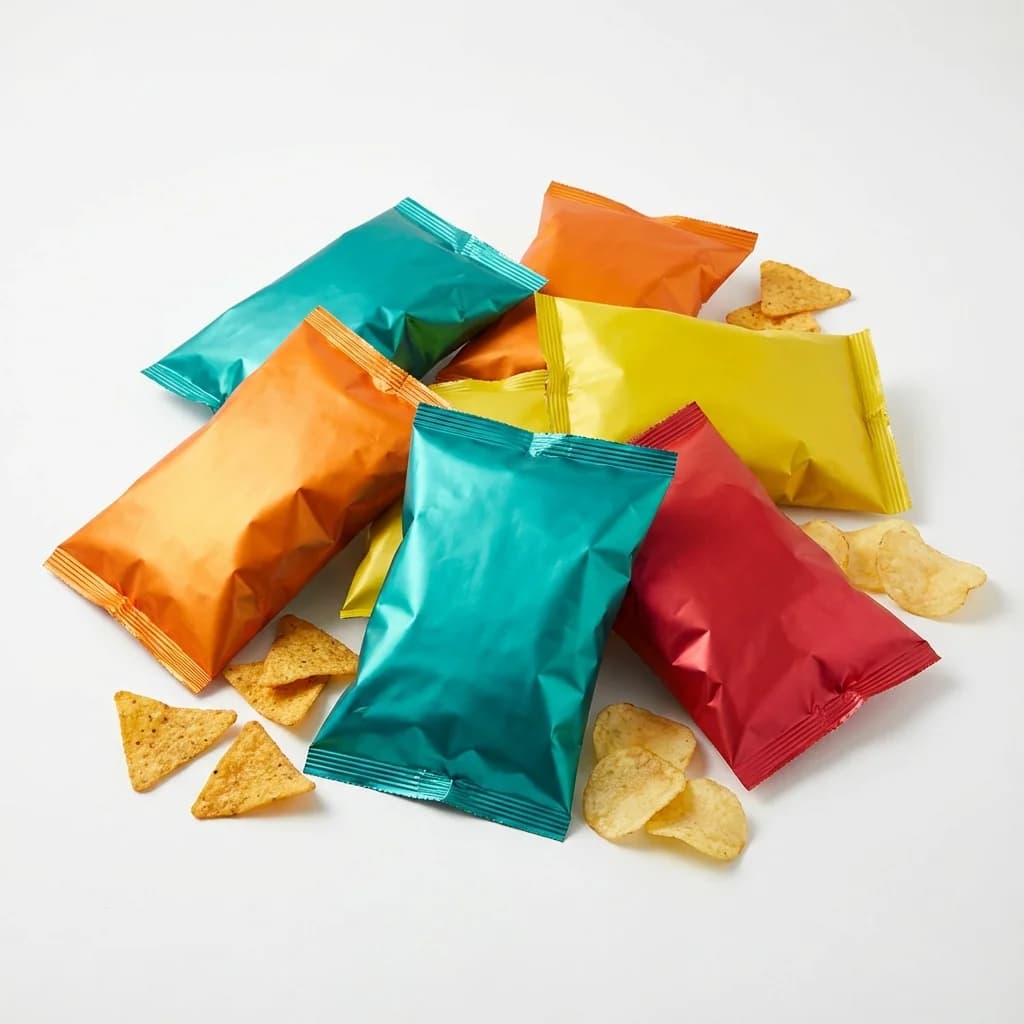
Summary: The snack sector requires a delicate balance between high-speed production lines, product protection, and consumer expectations. This guide covers everything from VFFS technology and nitrogen flushing to film structures and resealable solutions.
Snack Market and Packaging Challenges
The global snack market is a massive sector exceeding $700 billion. To compete, packaging must deliver:
- High speed: 300-600 packs per minute
- Crunch preservation: texture must remain until opening
- Prevention of fat oxidation: avoid rancidity and bitterness
- Mechanical protection: prevent breakage during transport
- Shelf appeal: attention-grabbing design and shine
VFFS and HFFS Technologies
What Is VFFS?
Vertical Form Fill Seal (VFFS) is the most common snack packaging method:
- Film is fed vertically
- Formed into a tube
- Product is filled from the top
- Side and top/bottom seals are made
What Is HFFS?
Horizontal Form Fill Seal (HFFS) is preferred for fragile products:
- Film is fed horizontally
- Gentler product placement
- Ideal for fragile products (cookies, wafers)
- Typically lower speed
Machine Speeds
| Product Type | Typical Speed (packs/min) | Machine Type |
|---|---|---|
| Chips (25-50g) | 150-300 | VFFS |
| Nuts (100-250g) | 80-150 | VFFS |
| Biscuits (packaged) | 200-400 | HFFS/Flow-wrap |
| Chocolate bars | 300-600 | Flow-wrap |
Film Structure Selection
BOPP/BOPP - Cost-Effective Choice
Advantages: excellent stiffness, good machinability, glossy appearance, economical
Disadvantages: medium oxygen barrier
Use: short-to-medium shelf life, fast turnover products
PET/PE - Higher Barrier
Advantages: higher barrier, good mechanical strength
Disadvantages: more expensive than BOPP
Use: premium products, longer shelf life
BOPP/MPET/PE - Maximum Protection
Advantages: very high barrier, metallic glossy look
Disadvantages: highest cost, recycling challenges
Use: ultra-premium, fatty products, long shelf life
Nitrogen Flushing (MAP) Technology
What Is MAP?
Modified Atmosphere Packaging (MAP) replaces air inside the package with nitrogen or CO2 to improve protection:
- N2 (Nitrogen): removes oxygen, inert environment
- CO2: antimicrobial effect, can affect taste in some products
- Blend: optimized gas mixture by product
MAP Benefits
- Reduces oxygen to below 1%
- Prevents fat oxidation
- Preserves crunch
- Extends shelf life by 2-3x
- Cushioning effect for mechanical protection
MAP Requirements
- Film OTR must be < 5 cc/m²/day
- Seal integrity is critical
- Accurate gas mix control
- Process monitoring
The Science of Crunch Preservation
Main causes of crunch loss in snacks:
1. Moisture Absorption
Starch-based products soften with moisture. Critical moisture threshold varies by product (typically 3-6%).
2. Fat Oxidation
Oxidation in fatty products also changes texture.
3. Temperature
High temperatures accelerate moisture migration.
Solutions
- Films with high WVTR barrier
- MAP (nitrogen) use
- Proper storage conditions
- Quality zipper after opening
Resealable Solutions
Why It Matters
Consumers don’t finish larger packs (100g+) at once. Resealability preserves freshness and improves satisfaction.
Options
| Solution | Cost | Features |
|---|---|---|
| Press-to-close zipper | Medium | Standard solution, easy to apply |
| Peel-reseal label | Low | Added to existing structure |
| Slider zipper | High | Premium experience |
| Tin-tie | Low | Artisanal look |
Portion-Control Packaging
As health awareness rises, smaller formats are gaining popularity:
- 100-calorie packs: diet-focused consumers
- Multi-packs: family sizes with small portions
- On-the-go formats: convenience consumption
Sustainability Trends
Mono-Material Transition
Mono-PP or Mono-PE structures provide recyclable alternatives. Barrier performance is approaching traditional laminations.
Downgauging
Reducing film thickness optimizes material use. Savings of 10-20% are possible.
Frequently Asked Questions (FAQ)
Why are chip bags inflated?
The puffed bag comes from nitrogen inside. It protects the product from oxidation and acts as a cushion against breakage during transport. The puff is a quality indicator.
What is the ideal film thickness for VFFS?
Typical VFFS applications use total film thickness of 50-80μ. Thinner films can cause issues at high speed; thicker films increase cost. Optimization depends on machine settings and product needs.
What is the cost of nitrogen flushing?
Initial investment for MAP systems ranges from $10,000-50,000. Operating cost is around 0.01-0.05 USD per pack. Payback is typically 6-12 months thanks to longer shelf life and reduced waste.
Is metallized film recyclable?
Traditional metallized films (BOPP/MPET/PE) are difficult to recycle. Mono-material metallized alternatives are emerging. Brands with sustainability goals should consider mono-PP or mono-PE high-barrier options.
What is the minimum order quantity for snack packaging?
For stock films, MOQ is typically 500-2,000 kg; for custom-printed films, 2,000-5,000 kg. Digital printing can enable lower custom quantities.
Conclusion
Successful snack packaging requires:
- ✅ Film choice that matches machine speed
- ✅ Barrier structure aligned with product needs
- ✅ MAP technology to extend shelf life
- ✅ Resealability for larger packs
- ✅ Meeting sustainability requirements
At MyPlast, we provide expert support for VFFS-compatible films, MAP applications, and zipper solutions.
Contact Us →